Fate of the Phoenix: My Byzantine Survival Adventure
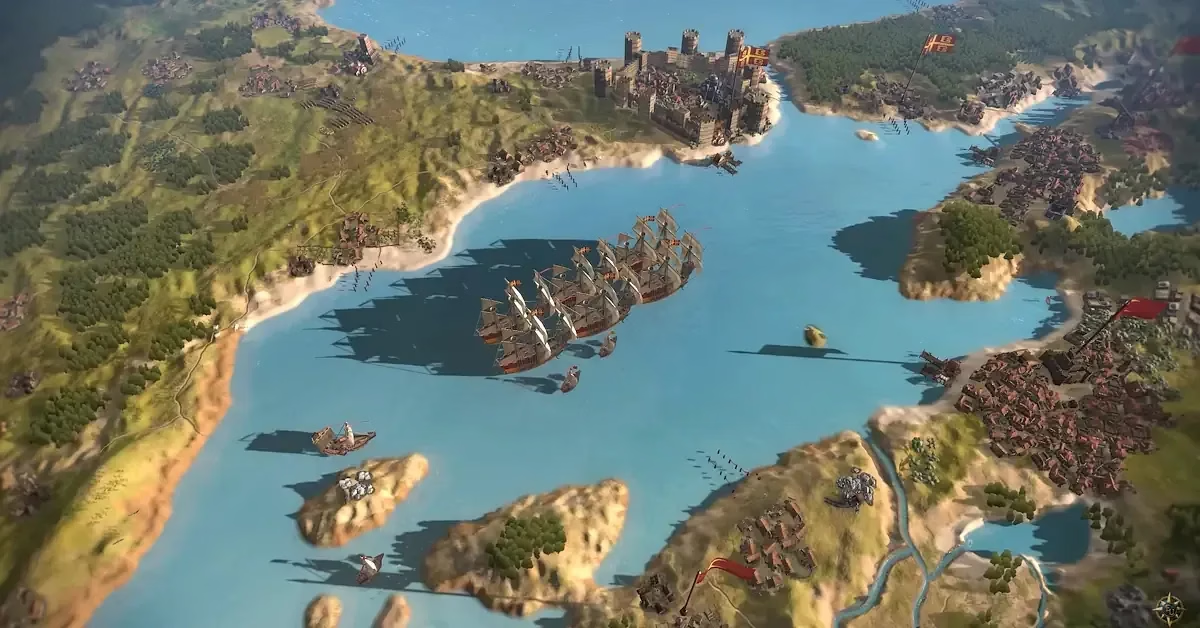
I've been playing grand strategy games for years, but nothing quite prepared me for the historical rollercoaster that is Europa Universalis V: Fate of the Phoenix. When Paradox Interactive dropped this immersion pack on May 6, 2026, I knew I had to dive headfirst into the crumbling glory of Byzantium. And let me tell you, it's been one heck of a ride—equal parts exhilarating and absolutely brutal! 😅
A Phoenix Rising from Economic Ashes 🔥
When I first launched my Byzantine campaign, I thought I'd be commanding a mighty empire. Instead, I found myself staring at a treasury drowning in debt, a legitimacy meter lower than my chances of winning the lottery, and the Ottoman Empire breathing down my neck like an angry dragon. This isn't your typical grand strategy power fantasy—this is a survival horror game disguised as a historical simulator!
The expansion introduced what Paradox calls the "Fate of the Phoenix" disaster system, and it's aptly named. From the moment you unpause the game, you're fighting for your empire's very existence. Traditional mission trees? Gone. Long-term strategic planning? Think again. Every decision feels like triage in an emergency room, and I absolutely love it.
What makes this challenge so engaging is how it forces you to abandon conventional gameplay strategies. I couldn't just blob across the map like in previous Europa Universalis titles. Every military engagement required careful calculation, every diplomatic overture carried weight, and every economic decision could mean the difference between renaissance and ruin.
The Cultural Identity Crisis: Latin or Greek? 🏛️
One of the most fascinating mechanics introduced in Fate of the Phoenix is the "Latinitas vs. Romanismos" societal value system. This isn't just some abstract slider—it fundamentally shapes how your empire develops and which allies you can court.
I faced this dilemma early in my playthrough: Do I swallow my pride and align with the Western Latin powers, securing military aid and economic partnerships? Or do I dig in my heels, embrace my Greek heritage, and chart an independent course that honors my ancestors?
The first time through, I went full Romanismos. I rejected Western influence, doubled down on Greek culture, and tried to stand alone against the Ottoman tide. It was glorious, defiant, and... ultimately disastrous. My second attempt saw me pragmatically courting Latin support, which felt like betraying my heritage but kept my empire afloat long enough to stabilize. The tension between survival and identity creates genuine emotional investment in your campaign.
Restoring the Old Gods: A Pagan Renaissance 🏺
Here's where things get really wild: the expansion allows you to restore the Hellenic faith! When I first discovered this alternative historical path, I thought it was just a gimmick. But Paradox went all-in with this feature, implementing over 60 unique omens and 11 distinct religious aspects.
My pagan restoration campaign became my favorite playthrough. Watching Zeus and Athena return to prominence in Constantinople (or should I say, New Athens?) felt delightfully heretical. The omens system adds a layer of mysticism and unpredictability that perfectly captures the ancient religious experience. One moment I'm receiving divine favor that boosts my armies; the next, I'm dealing with unfavorable portents that demand ritual sacrifices.
The religious mechanics aren't just cosmetic either. They interact meaningfully with the broader political landscape, affecting diplomatic relations, internal stability, and even military morale. Converting my empire to worship the Olympian pantheon created entirely new challenges and opportunities that kept the campaign fresh.
The Free Update That Changed Everything ⚙️
While Fate of the Phoenix focuses on Byzantine content, the simultaneous 1.2 "Echinades" patch transformed the entire base game. And here's the kicker—all these fundamental improvements are completely free! This is what I appreciate most about Paradox's DLC strategy: they don't gate core mechanical improvements behind paywalls.
The patch notes boast over 2,000 bug fixes, which sounds impressive until you realize just how much they've overhauled. The Holy Roman Empire received a complete structural revision that makes Central European gameplay feel like an entirely new experience.
Military Logistics: Supply Lines Matter Now 🎖️
The military overhaul deserves special attention because it fundamentally changed how I approach warfare. The game now strictly divides forces between Heavy and Light troops, each serving distinct tactical roles. But the real game-changer is the new food consumption system.
Armies now consume provisions dynamically, requiring 10 times more supplies than in previous versions. Yes, you read that correctly—ten times more! 📦📦📦
This seemingly simple change created cascading strategic implications:
-
Extended campaigns require extensive planning: I can't just march my armies across Europe anymore. I need to establish supply depots, secure supply lines, and carefully manage logistics.
-
Scorched earth tactics actually matter: Cutting enemy supply lines became a legitimate strategy rather than a minor inconvenience.
-
Seasonal warfare returns: Winter campaigns became genuinely risky, just like in actual historical conflicts.
-
Army composition requires thought: Balancing heavy and light troops isn't just about combat effectiveness—it's about logistical sustainability.
I learned this the hard way when my massive army starved halfway through an invasion of Anatolia. Pro tip: always check your supply situation before declaring ambitious wars! 😅
The Imperial Diet: Politics Gets Complicated 🗳️
The Holy Roman Empire's new Imperial Diet voting system adds delicious complexity to Central European politics. The modernized UI makes these intricate political maneuvers more accessible, while Imperial Armories provide new strategic depth to military development.
Even though I was focused on my Byzantine campaign, these HRE changes affected my gameplay. The shifting power dynamics in Central Europe created diplomatic opportunities and threats that rippled across the map. The interconnected nature of these systems showcases why Europa Universalis remains the gold standard for grand strategy.
Value Proposition: Worth Every Penny 💰
At under £10 (approximately $15 USD), Fate of the Phoenix represents exceptional value for strategy enthusiasts. Here's my honest assessment:
| Aspect | Rating | Notes |
|---|---|---|
| Content Depth | ⭐⭐⭐⭐⭐ | Extensive Byzantine-focused mechanics |
| Replayability | ⭐⭐⭐⭐⭐ | Multiple paths (Latin, Greek, Pagan) |
| Value for Money | ⭐⭐⭐⭐⭐ | Excellent price point |
| Integration | ⭐⭐⭐⭐⭐ | Seamless with base game |
| Learning Curve | ⭐⭐⭐ | Steep but rewarding |
What really impresses me is how Paradox structured this release. The most critical mechanical changes—military logistics, HRE overhaul, economic systems—come free with the 1.2 patch. The DLC provides deep narrative flavor and regional content without feeling mandatory for enjoying the base game.
If you own the Premium Edition, you get Fate of the Phoenix automatically as part of your bundled content. That's a fantastic bonus for early supporters of the franchise.
Who Should Buy This? 🤔
This expansion isn't for everyone, and that's okay! Here's my recommendation guide:
Must-buy if you:
-
Love Byzantine history and Eastern Mediterranean campaigns
-
Enjoy high-difficulty survival scenarios
-
Want deep role-playing opportunities in strategy games
-
Appreciate alternative history "what if" scenarios
-
Already own Europa Universalis V and play regularly
Maybe skip if you:
-
Prefer playing Western European powers exclusively
-
Find extremely challenging starts frustrating
-
Only play casually and don't engage with complex mechanics
-
Haven't purchased the base game yet (wait for a bundle)
The Bigger Picture: Paradox's DLC Philosophy 📊
This release demonstrates Paradox's refined DLC strategy in 2026. By pairing paid regional content with substantial free updates, they've found a balance that respects both paying customers and the broader player base.
The approximately six-month gap between base game launch (November 2025) and this first immersion pack feels appropriate. It gave players time to master core mechanics before introducing specialized content. It also allowed Paradox to gather community feedback and incorporate improvements into the 1.2 patch.
Comparing this to previous Europa Universalis IV DLC cycles, the quality-to-price ratio has improved dramatically. Earlier expansions sometimes felt thin or overpriced. Fate of the Phoenix delivers substantial content at a reasonable cost, setting a positive precedent for future releases.
Tips for New Byzantine Players 🛡️
After countless hours wrestling with bankruptcy and Ottoman invasions, here are my hard-earned lessons:
-
Don't overextend militarily: Your starting position is precarious. Resist the urge to fight everyone at once.
-
Focus on economic stabilization first: Get your finances in order before pursuing ambitious conquests.
-
The diplomatic game matters: Secure powerful allies early. You can't survive alone.
-
Manage your legitimacy carefully: Low legitimacy creates internal instability when you least need it.
-
Study the disaster mechanics: Understanding the "Fate of the Phoenix" disaster conditions helps you avoid catastrophic spirals.
-
Experiment with cultural paths: Try both Latinitas and Romanismos approaches—they create vastly different campaigns.
-
Save the Hellenic restoration for your second playthrough: Master the basics first before tackling pagan conversion.
Final Thoughts: A Magnificent Challenge 🏆
Six months into Europa Universalis V's lifecycle, Fate of the Phoenix represents exactly what immersion packs should be: deep, focused content that enriches a specific region without fragmenting the player base. The simultaneous 1.2 patch ensures everyone benefits from improved mechanics, while DLC purchasers get rich narrative experiences.
My Byzantine campaigns have provided some of my most memorable grand strategy moments in recent years. The desperate scramble for survival, the agonizing cultural decisions, and the satisfaction of defying historical fate create powerful emergent storytelling. Every successful campaign feels like a genuine achievement rather than an inevitable outcome.
Is it perfect? No. The learning curve is steep, and the difficulty might frustrate players seeking more relaxed experiences. But for those who relish complex challenges and historical what-if scenarios, Fate of the Phoenix delivers magnificently.
As I write this in 2026, with future DLC releases on the horizon, this first immersion pack sets a high bar. If Paradox maintains this quality standard for subsequent expansions, Europa Universalis V has a bright future ahead.
Now if you'll excuse me, I need to return to Constantinople. The Ottomans are at my gates again, my treasury is empty, and I'm pretty sure Zeus just sent me an unfavorable omen. But that's just another Tuesday in Byzantine politics! 😄⚔️
Note: Prices and availability mentioned are based on May 2026 launch information and may vary by region and retailer.
