My First Week as a Checkpoint Officer in Quarantine Zone
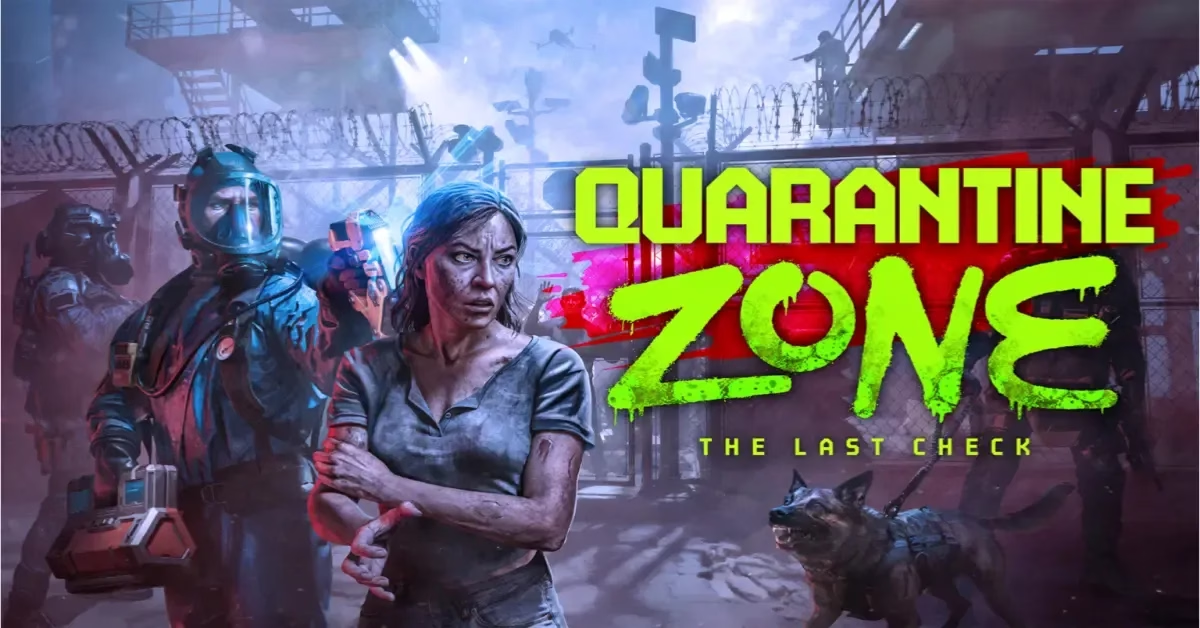
I never thought I'd be the one deciding who lives and who dies. But here I am, standing at the last checkpoint before the safe zone, armed with nothing but a UV light, a thermometer, and my increasingly unreliable gut instinct. Welcome to my new reality in Quarantine Zone: The Last Check.
Trading Places: From Runner to Gatekeeper
After countless hours sprinting across empty fields in DayZ, desperately searching for a can of beans while avoiding zombies, I was ready for something different. Don't get me wrong—I loved the adrenaline rush of that endless survival simulator. But honestly? I was exhausted. The constant running, the inventory management, the inevitable death after hours of progress... it wore me down.
That's when Quarantine Zone caught my attention. Instead of being the desperate survivor begging for entry, I'm now the person controlling the gates. It's a weird power trip, I'll admit. The game launched on January 12, 2026, and I jumped in immediately, curious about this role reversal.
The Weight of a Clipboard
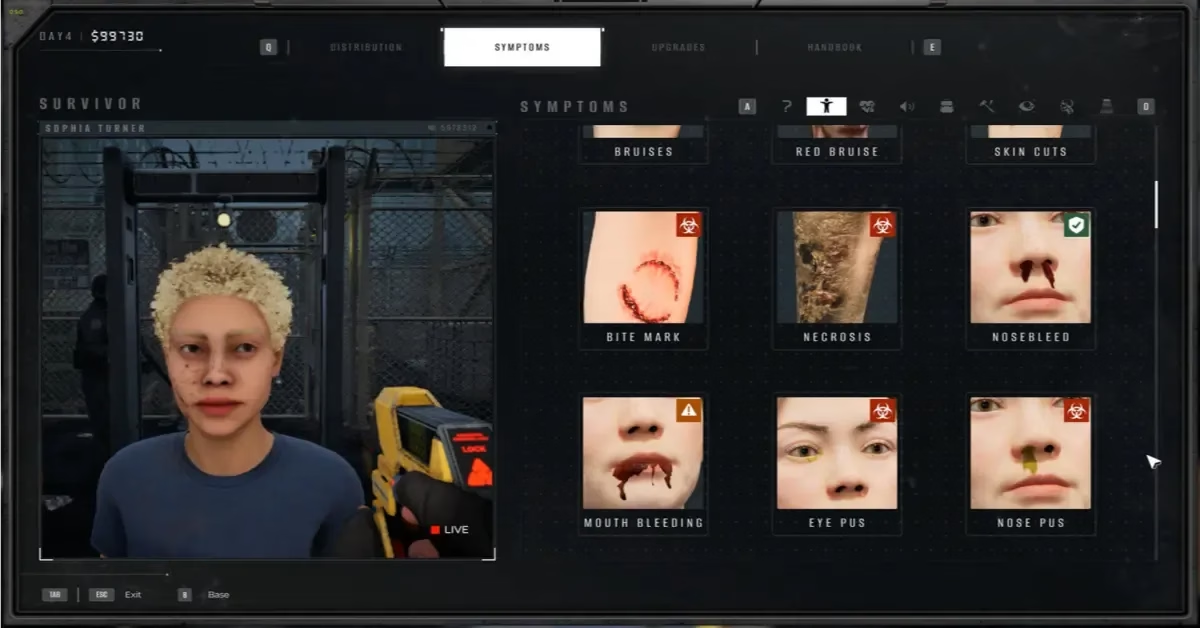
Let me tell you something—this game is basically "Papers, Please" but with infected people instead of political dissidents. My job sounds simple on paper: screen refugees trying to enter the safe zone. Check their temperature, scan them with UV light, look for bite marks, and make the call. Easy, right?
Wrong. So wrong.
The first time I let someone through who turned out to be infected, I watched in horror as they transformed inside the camp. The screams still haunt me. That's when I realized this isn't just a game about checking boxes—it's about living with your mistakes. Every decision carries weight, and there's no reload button for your conscience.
The Tools of My Trade
My arsenal is laughably simple:
-
UV Light: Reveals hidden bite marks and infections that aren't visible to the naked eye
-
Thermometer: Catches fevers before they become full-blown infections
-
Gut Instinct: The most unreliable tool, but sometimes the most important
That's it. No guns, no fancy tech, just basic medical equipment and my judgment. The simplicity is what makes it terrifying. I've started noticing patterns—nervous behavior, inconsistent stories, suspicious wounds. But sometimes perfectly healthy people act nervous too, because, you know, they're terrified of being turned away to die.
The Moral Minefield
Here's where things get messy. The game doesn't just ask you to identify infected people—it forces you to make impossible choices. What do you do when:
-
A family arrives, but only the father shows signs of infection?
-
Your camp is running low on food, and you have to turn away healthy people?
-
Someone offers you their last valuable possession for entry?
-
A child has a fever that might just be the flu?
I've had to "liquidate" people. That's the game's clinical term for it, but let's be honest—I've had to kill people who might have been savable. The game doesn't shy away from this reality, and neither can I. It's brutal, it's uncomfortable, and it's exactly what makes this experience so compelling.
Resource Management: The Silent Killer
While I'm busy playing judge and executioner, I'm also managing the camp's survival. Every person I let through consumes resources:
| Resource | Impact | Consequence of Shortage |
|---|---|---|
| Food | Daily consumption per person | Starvation, unrest |
| Fuel | Powers generators and heating | Hypothermia, darkness |
| Medical Supplies | Treats injuries and illness | Preventable deaths |
| Morale | Affects productivity | Rebellion, desertion |
It's a constant balancing act. Let in too many people, and we run out of food. Be too strict, and I'm left wondering if I'm any better than the infected outside. The paperwork might not seem deadly at first, but trust me—a miscalculated food inventory is just as lethal as a missed bite mark.
Why This Beats the AAA Grind
Look, I love big-budget games as much as the next person, but there's something refreshing about Quarantine Zone's approach. DayZ costs around $45 or more for what's essentially an older experience at this point. Meanwhile, this indie gem from Devolver Digital launched at $19.99 on Steam.
But here's the insider tip: I actually grabbed my key from one of those comparison sites for closer to $15. For the price of a decent lunch, I got a game that's consumed my thoughts for the past week. No endless running simulator, no starting from scratch after a random death, just pure, concentrated tension and decision-making.
The Devolver Digital Touch
There's a reason this game feels so polished despite its indie roots. Devolver Digital has a track record of publishing unique, high-quality experiences that punch above their weight class. They understand that not every game needs a massive open world or cutting-edge graphics to be engaging. Sometimes, all you need is a compelling premise and tight execution.
My Verdict After One Week
I'm hooked. Completely, utterly hooked. This game respects both my time and my wallet in ways that modern AAA titles often don't. Each session lasts maybe 30-45 minutes, but the decisions I make stick with me long after I close the game.
The narrative-driven experience feels focused and intentional. There's no filler content, no grinding for the sake of extending playtime. Every moment matters, every choice has consequences, and every shift at the checkpoint tells a story.
Who Should Play This?
If you're into:
✅ High-stakes decision-making
✅ Moral dilemmas that actually make you think
✅ Management games with real consequences
✅ Narrative-driven experiences
✅ Games that respect your time and budget
Then this is an instant buy. Seriously, grab a key while the launch deals are still available.
The Question That Keeps Me Up
Every night, I find myself thinking about the people I turned away. Were they really infected? Could I have saved them? Did I make the right call?
The game doesn't give you easy answers, and that's exactly why it works. In 2026, when so many games hold your hand through every decision, Quarantine Zone trusts you to live with your choices—good or bad.
Final Thoughts
I've been manning this checkpoint for a week now, and I still don't know if I'm doing the right thing. Maybe that's the point. The game asks a simple question: when survival is on the line, who deserves to be saved?
I don't have the answer yet. But I'm going to keep showing up for my shift, UV light in hand, trying to hold the line between safety and catastrophe. Some days I trust the refugees. Other days, I lock the gates tight and try not to think about the faces on the other side.
Will you trust your instincts, or will you play it safe? There's only one way to find out. The checkpoint is waiting, and the infected aren't getting any more patient.
Time to clock in. 🔦
