Ready or Not Faces Storm Over Console Censorship
The tactical shooter community found itself in turmoil as Void Interactive, the studio behind the hyper-realistic SWAT simulator Ready or Not, confronted an unprecedented wave of criticism. What began as a routine announcement about the game's upcoming console release transformed into a full-blown controversy that would test the relationship between developers and their dedicated fanbase.
In the spring of 2025, Void Interactive revealed plans to bring their acclaimed tactical FPS to PlayStation 5 and Xbox Series X|S platforms, with a launch date set for July 15. However, the excitement surrounding this expansion was quickly overshadowed by news that the game would undergo modifications to certain content elements. The announcement triggered an immediate and intense reaction from the Steam community, where thousands of players had already invested countless hours into the game's realistic SWAT operations.
The Review Bombing Campaign
Within a remarkably short timeframe of just six days, the game's Steam rating plummeted from "Very Positive" to "Mostly Negative." Players flooded the platform with critical reviews, expressing their disappointment and frustration with what they perceived as a betrayal of the game's core identity. The speed and intensity of this response demonstrated the passionate investment the community had developed in Ready or Not's uncompromising approach to realism.
The review bombing phenomenon represented more than simple dissatisfaction—it embodied players' concerns about the future direction of a game they had come to love for its authentic, no-holds-barred depiction of SWAT operations. Forum discussions erupted across gaming communities, with some calling the game "dead" while others simply declared that "censorship is bad." The sentiment reflected a broader anxiety within gaming culture about artistic integrity and commercial compromise.
Understanding the Changes
In response to the growing controversy, Void Interactive took the unusual step of releasing detailed information about the specific modifications being implemented. The developer emphasized that these changes were necessary to "ensure a smooth global launch across platforms," acknowledging that as a hyper-realistic tactical FPS, Ready or Not faced different regulatory scrutiny compared to more stylized or fictional games.
The studio identified six targeted visual adjustments that would be applied uniformly across all platforms:
Mission-Specific Modifications
Twisted Nerve Mission: The controversial scene featuring a convulsing girl underwent revision, with the character now depicted in a sleeping state instead. This change addressed concerns about the graphic portrayal of distress while maintaining the mission's narrative context.
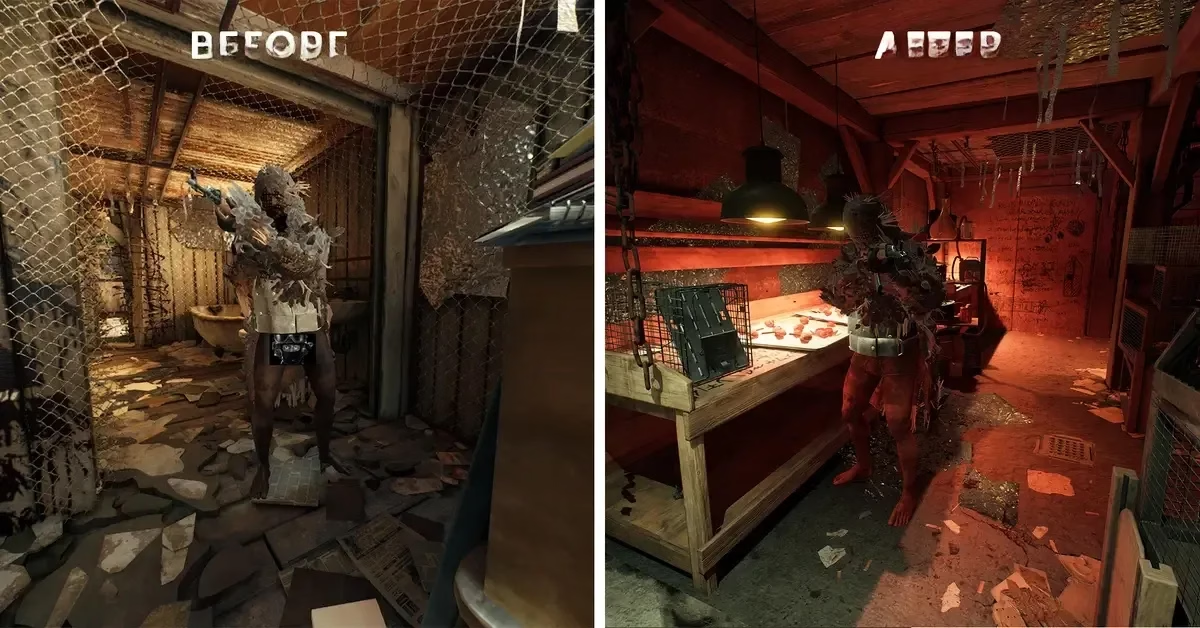
A Lethal Obsession: Content involving nudity with the ghillie suit suspect received adjustments to meet platform standards while preserving the threatening nature of the encounter.
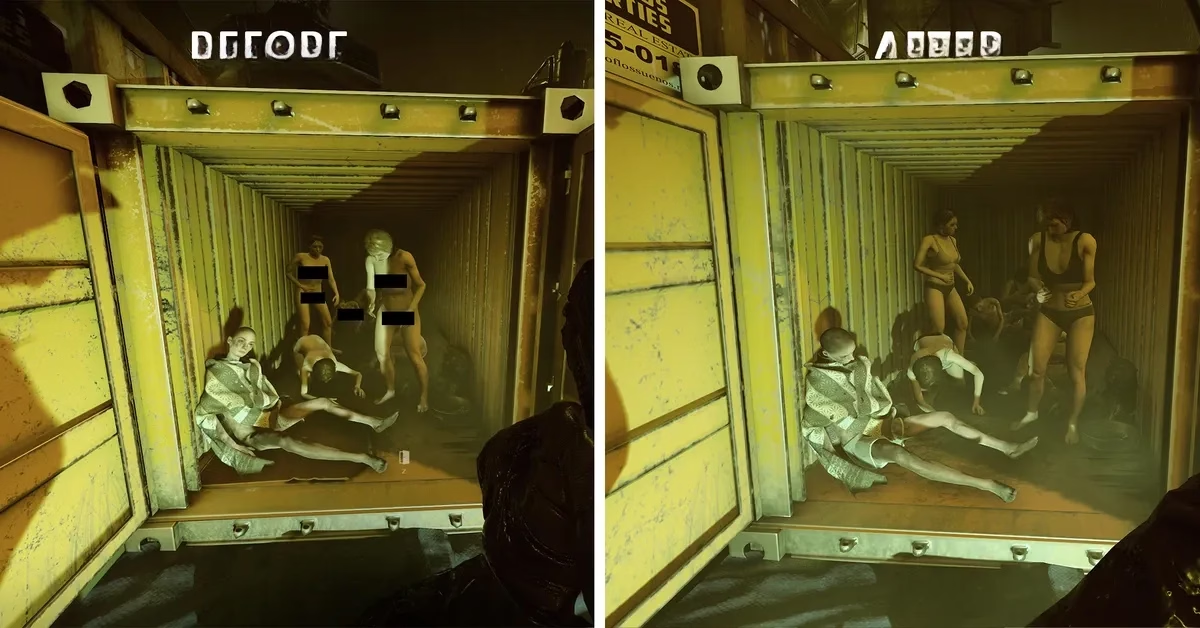
Hide and Seek Operation: Female hostages in this mission now appear wearing underwear, modifying the previous more graphic depiction of vulnerable civilians.
Narcos Mission: Similar to Hide and Seek, the police informant hostage now wears underwear, addressing concerns about the portrayal of victims in compromising situations.
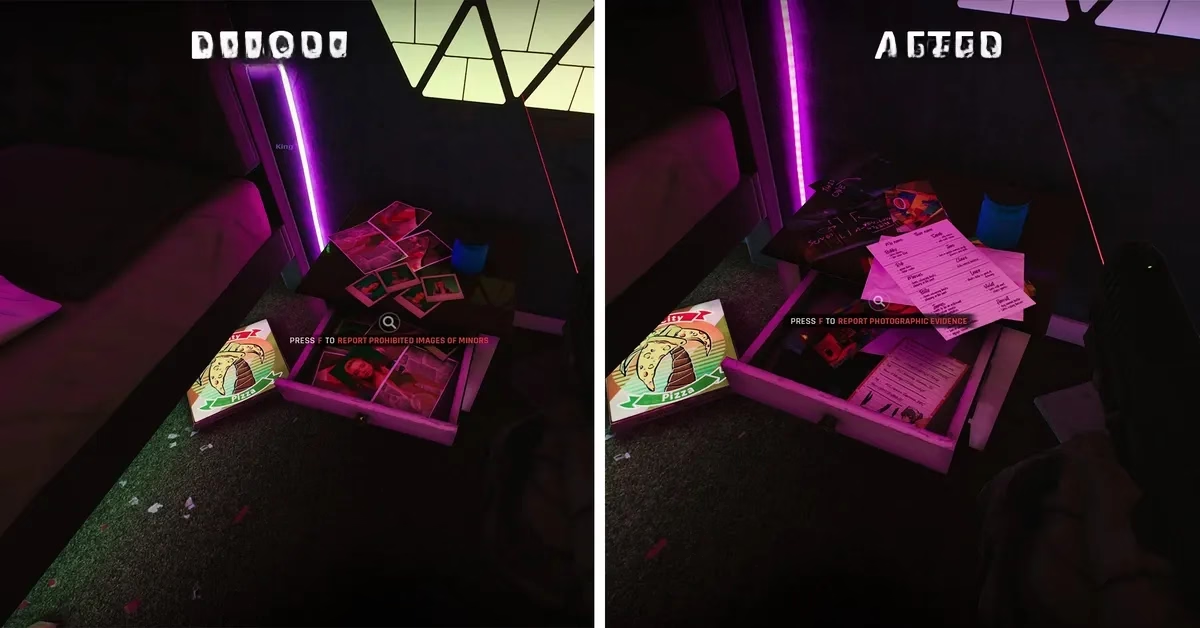
23 Megabytes a Second: Perhaps one of the most sensitive changes involved the 'Photo of Minors' objective model, which was completely revised. Void Interactive noted this modification would also better connect narratively with the subsequent 'Sinuous Trail' mission, suggesting the change served both regulatory and storytelling purposes.
Gameplay Mechanics Adjustment
Beyond mission-specific content, Void Interactive announced the disabling of post-mortem dismemberment effects. However, the studio carefully clarified that dismemberment for living characters would remain unchanged, indicating an effort to balance regulatory requirements with gameplay authenticity where possible.
The Cross-Platform Dilemma
A crucial factor in Void Interactive's decision-making process revolved around technical and community considerations. The studio explained that implementing these changes across all platforms, including PC, would enable seamless cross-platform multiplayer functionality. Maintaining separate versions for PC and consoles would fragment the player base and create significant development challenges.
This reasoning highlighted the complex calculus developers face in 2026's gaming landscape. The promise of unified multiplayer experiences across PlayStation, Xbox, and PC represented a significant value proposition for players. However, achieving this unity required compromises that some longtime PC players found unacceptable.
Developer Philosophy and Industry Reality
In their comprehensive response blog post, Void Interactive addressed the philosophical tension at the heart of the controversy. The studio stated unequivocally: "As a hyper-realistic tactical FPS, Ready or Not faces different scrutiny than more stylized or fictional games. That's a reality of the world we publish in—not a change in our creative vision or values."
This statement attempted to draw a distinction between external regulatory pressures and internal creative direction. The developers positioned themselves as navigating unavoidable industry constraints rather than voluntarily diluting their artistic vision. They emphasized that these modifications represented tactical adjustments to reach broader audiences rather than fundamental shifts in the game's identity.
Community Division and Ongoing Debate
😠 The Critics' Perspective
Opponents of the censorship argued that Ready or Not's unflinching realism represented its primary appeal. They contended that sanitizing certain elements undermined the game's authenticity and educational value in depicting the genuine challenges SWAT teams face. Many expressed concern about a slippery slope—if these changes were accepted, what would prevent further dilution in future updates?
Some players felt betrayed, having supported the game through early access specifically because of its commitment to realism. The modifications, they argued, represented a fundamental breach of trust between developers and the community that had sustained the game during its development.
🤔 The Pragmatists' View
Others in the community adopted a more understanding stance, recognizing the practical realities of modern game publishing. These players acknowledged that expanding to consoles would bring new players, extended support, and potentially more content updates. They argued that the specific changes, while regrettable, represented minor adjustments that wouldn't fundamentally alter core gameplay experiences.
This faction pointed out that tactical mechanics, weapon handling, mission design, and strategic depth—the elements that truly defined Ready or Not's gameplay—remained completely intact. The visual modifications, they contended, affected only specific moments in specific missions.
Table: Impact Analysis of Content Changes
| Mission/Feature | Original Content | Modified Content | Gameplay Impact | Narrative Impact |
|---|---|---|---|---|
| Twisted Nerve | Convulsing character | Sleeping character | Minimal | Reduced intensity |
| A Lethal Obsession | Explicit nudity | Covered nudity | None | Slight reduction |
| Hide and Seek | Unclothed hostages | Underwear-clad hostages | None | Minimal |
| Narcos | Unclothed informant | Underwear-clad informant | None | Minimal |
| 23 Megabytes | Original photo model | Revised model | None | Enhanced connection |
| Post-mortem effects | Full dismemberment | Disabled | Minimal aesthetic change | None |
Industry Context and Precedents
The Ready or Not controversy echoed similar debates that had erupted around other games attempting to balance artistic vision with market accessibility. Throughout gaming history, numerous titles have faced pressure to modify content for different regions or platforms, often generating passionate community responses.
What distinguished this situation was Ready or Not's specific positioning as a simulator emphasizing realism. Games marketed on authenticity face unique expectations, and any perceived compromise in that authenticity generates intensified scrutiny. The tactical shooter genre, with its focus on real-world scenarios and equipment, attracts players specifically seeking that unfiltered experience.
The Path Forward
As of 2026, the controversy continues to evolve. Steam reviews remain predominantly negative, indicating that the initial explanation from Void Interactive hasn't fully satisfied concerned players. The community post addressing the changes filled with comments ranging from understanding acceptance to vehement opposition, demonstrating the deep divide within the player base.
The upcoming console launch on July 15, 2025, represents a critical juncture for Ready or Not's future. Console players, experiencing the game for the first time with these modifications already in place, may have entirely different perspectives than PC veterans who witnessed the changes. Their reception could validate Void Interactive's approach or further fuel the controversy.
🎮 Key Questions Moving Forward:
-
Will new console players perceive any absence in content they never experienced?
-
Can the unified cross-platform community overcome divisions about the changes?
-
Will Void Interactive implement additional modifications based on console market feedback?
-
How will this controversy affect other developers considering similar cross-platform strategies?
Broader Implications for Gaming
The Ready or Not situation illuminates fundamental tensions in modern game development. Developers increasingly face pressure to maximize their potential audience across multiple platforms while satisfying existing communities built around specific game identities. The balance between commercial viability and artistic integrity remains perpetually precarious.
Cross-platform play, increasingly expected by modern gamers, introduces additional complexity. While unified player bases offer tremendous value, achieving platform parity sometimes requires compromises that not all community segments find acceptable. The question becomes: at what point do the benefits of expanded reach outweigh the costs of modified content?
Technical and Regulatory Considerations
Console platforms maintain stricter content guidelines than PC, reflecting their positioning as family-friendly entertainment ecosystems. Sony and Microsoft enforce content standards designed to protect their brand images and satisfy regional regulatory requirements. Games seeking console certification must navigate these requirements, which can vary significantly across global markets.
Void Interactive's decision to implement changes across all platforms, rather than maintaining separate PC and console versions, reflected both technical and community considerations. Separate versions would require parallel development pipelines, doubling quality assurance efforts and potentially introducing gameplay discrepancies that could affect competitive balance in multiplayer scenarios.
Community Trust and Developer Communication
One aspect of the controversy that deserves examination involves communication strategy. Void Interactive's decision to provide detailed before-and-after comparisons and explicit explanations of each change represented a relatively transparent approach. Many developers facing similar situations might have implemented modifications quietly, hoping to avoid controversy.
Yet despite this transparency, the negative reaction persisted, suggesting that communication alone cannot resolve fundamental disagreements about creative direction. Some community members appreciated the detailed explanation while remaining opposed to the changes themselves—a distinction between process and outcome that developers must understand.
Looking Toward July 15
As the console launch date approaches, all eyes remain on Ready or Not's reception across platforms. Will console players embrace the tactical shooter, validating Void Interactive's decision to expand its reach? Will the Steam review bombing eventually subside as the community processes the changes? Or will this controversy permanently alter the game's trajectory and reputation?
The situation serves as a case study for the entire gaming industry, illustrating the complex interplay between creative vision, commercial reality, platform requirements, and community expectations. Whatever the outcome, Ready or Not's censorship controversy will likely influence how future developers approach similar cross-platform expansions.
The debate ultimately centers on fundamental questions about what makes a game authentic, who gets to define that authenticity, and how much compromise is acceptable in service of broader goals. These questions lack easy answers, ensuring that discussions will continue long after July 15 arrives and console players experience Ready or Not for themselves. The gaming community watches, debates, and waits to see how this chapter in tactical shooter history concludes.
