Shift Up Goes Independent: Breaking Free from Publishing Giants
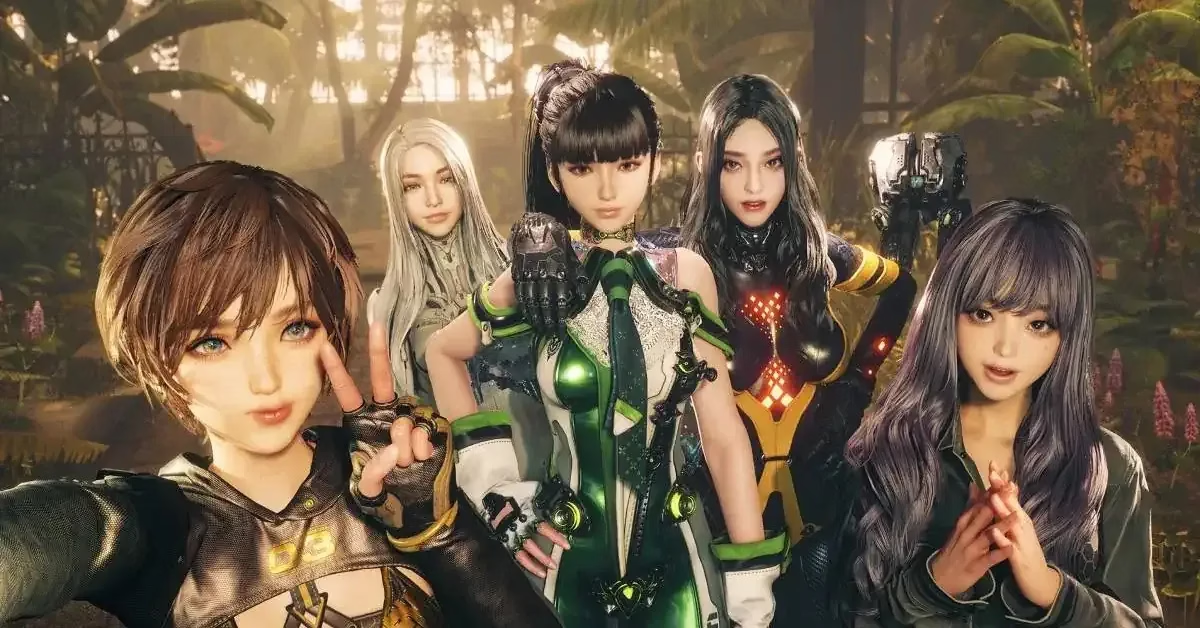
The gaming world witnessed something special when Stellar Blade burst onto the scene with its razor-sharp combat mechanics and breathtaking sci-fi environments. Players couldn't get enough of those split-second parries and meticulously crafted alien landscapes. But what's happening behind the scenes at Shift Up might be even more revolutionary than the game itself. The South Korean studio is orchestrating a dramatic transformation that could reshape how mid-sized developers operate in the modern gaming ecosystem.
Taking Control of Their Destiny
Shift Up has officially announced their intention to self-publish future console and PC titles, a move that signals confidence and ambition in equal measure. Recent job postings tell the whole story—they're actively recruiting for marketing specialists, PR professionals, and localization experts. This isn't just expansion for the sake of growth. The studio is methodically assembling the infrastructure needed to compete with industry behemoths on a global scale.
What makes this particularly noteworthy is the shift in philosophy. For the original Stellar Blade, Shift Up relied heavily on PlayStation's publishing muscle to get their game into players' hands. That partnership clearly worked—the numbers speak for themselves. But now they're ready to cut the cord and handle everything in-house. 💪
A studio representative spoke candidly with GameMeca about their long-term vision, and the message was crystal clear: complete self-sufficiency. They're not interested in temporary arrangements or project-by-project deals with major publishers anymore. Shift Up wants total control over how their games are developed, marketed, distributed, and supported post-launch.
The Numbers That Changed Everything
By mid-2025, Stellar Blade had moved over 3 million copies—an impressive achievement for what was essentially a new IP from a relatively unknown studio. That success validated everything Shift Up believed about their creative direction and market potential. More importantly, it gave them the financial runway to make bold decisions about their future.
A sequel is already confirmed and locked in for development. But here's where things get really interesting: nobody knows yet who will actually publish Stellar Blade 2. 🎮
If Shift Up successfully builds out their publishing capabilities before the sequel launches, they won't be beholden to any single platform holder or distribution partner. Sony helped make the first game a reality, and that partnership was mutually beneficial. But the sequel could potentially be a true multiplatform release from day one—PlayStation, Xbox, PC, and potentially even Nintendo's next-generation hardware.
Expanding the Universe Across Platforms
The studio's financial reports and investor communications reveal even more ambitious plans. They're not just thinking about the sequel—they're actively exploring how to bring the original Stellar Blade to completely new hardware ecosystems. A recent Q&A session with stakeholders specifically highlighted platforms beyond PS5 and PC, which were the game's original launch targets.
Current expansion targets include:
-
Current-generation Xbox consoles (Series X|S)
-
Nintendo Switch 2 (anticipated hardware)
-
Potential cloud gaming platforms
-
Additional PC storefronts beyond Steam
This multiplatform strategy isn't just about short-term revenue bumps. Shift Up views Stellar Blade as a long-tail franchise with staying power that extends well beyond typical release windows. By bringing the first game to entirely new audiences on different hardware, they're building organic anticipation for the sequel while establishing the brand across multiple gaming communities simultaneously.
It's actually a brilliant move when you think about the timing. New players discovering the original game on Xbox or Switch 2 will naturally be primed and ready when the sequel eventually launches. That kind of staggered exposure creates momentum that compounds over time rather than burning bright and fading fast.
What Self-Publishing Really Means
The decision to self-publish represents more than just a business strategy—it's a fundamental philosophical shift in how Shift Up approaches game development. When you rely on external publishers, you inevitably make compromises. Marketing priorities might not align perfectly with creative vision. Release timing could be dictated by corporate fiscal calendars rather than when the game is truly ready. Distribution deals might lock you into specific platforms even when broader availability makes more sense.
![xxx]
By building their own publishing infrastructure, Shift Up ensures their creative vision stays intact from initial concept all the way through to post-launch support. There's no middleman filtering feedback or making strategic decisions that might conflict with the developers' intentions. The people who actually make the games get to decide how those games reach players.
This approach requires significant investment in non-development areas:
| Department | Function | Strategic Importance |
|---|---|---|
| Marketing | Global campaign management | Brand building across regions |
| PR | Media relations and community management | Maintaining player engagement |
| Localization | Translation and cultural adaptation | Ensuring quality across languages |
| Distribution | Platform negotiations and logistics | Maximizing availability |
| Customer Support | Technical assistance and player satisfaction | Long-term retention |
Industry Implications and Precedents
Shift Up isn't the first studio to attempt this transition, but they might be positioned better than most to actually pull it off successfully. The gaming industry has seen numerous examples of developers trying to break free from traditional publisher relationships, with varying degrees of success.
Some studios have thrived after going independent—CD Projekt Red famously self-publishes The Witcher series and Cyberpunk 2077, maintaining complete creative control while building a massive global audience. Epic Games transformed from a talented developer into an ecosystem player with Fortnite and the Epic Games Store. Valve has always self-published, which eventually led to the creation of Steam itself.
But there are cautionary tales too. Self-publishing requires expertise and resources that pure development studios don't always possess. Marketing campaigns can flop without experienced leadership. Distribution deals take years to negotiate properly. Customer support infrastructure costs millions to maintain. 😰
What sets Shift Up apart is their methodical approach. They're not rushing into this transformation—they're building the foundation carefully while they still have a successful game generating revenue and goodwill. The job postings reveal they're looking for experienced professionals who've worked at major publishers or platform holders. They want people who know how the industry operates at the highest levels.
The Sequel Wildcard
Stellar Blade 2 represents the ultimate test case for this new strategy. If Shift Up can successfully launch a major sequel entirely on their own terms, it validates everything they're building. The first game benefited enormously from PlayStation's marketing muscle and platform prominence. Can the sequel achieve similar or better results without that partnership?
The answer probably depends on timing and execution. If Shift Up's publishing arm is fully operational before the sequel launches, they'll have the infrastructure to compete directly with major publishers. If they rush it and try to self-publish before they're truly ready, the game could underperform despite being mechanically excellent.
There's also the question of exclusivity deals. Sony might be willing to pay substantial sums for timed exclusivity on Stellar Blade 2, even if Shift Up is handling the actual publishing duties. Microsoft could make similar offers to bring the franchise to Xbox. These kinds of financial arrangements would provide significant upfront capital while still allowing Shift Up to maintain creative control.
Building a Long-Term Gaming Empire
The ultimate vision here extends far beyond a single franchise. Shift Up is positioning itself as a global heavyweight—a studio that can develop, publish, and support multiple franchises simultaneously across all major platforms. They're not content being "that studio that made Stellar Blade." They want to be mentioned in the same breath as FromSoftware, CD Projekt Red, and other independent powerhouses.
This requires thinking like a business, not just like passionate game developers. Financial planning becomes crucial. Hiring practices need to scale rapidly while maintaining culture. Supply chain management for physical releases demands expertise most studios never develop. Relationships with platform holders shift from purely creative partnerships to complex negotiations involving revenue splits, marketing commitments, and feature priority.
Key success factors moving forward:
✅ Maintaining game quality while expanding operational complexity
✅ Hiring experienced publishing professionals who understand global markets
✅ Building sustainable revenue streams beyond individual game launches
✅ Preserving studio culture during rapid growth
✅ Negotiating favorable platform terms without major publisher backing
What This Means for Players
For gamers, Shift Up's transformation could be overwhelmingly positive. Self-published games often maintain stronger post-launch support because the studio directly benefits from long-term player engagement. There's no publisher pressure to immediately move onto the next project. Updates, expansions, and community events can continue as long as they make strategic sense.
The multiplatform push for the original Stellar Blade means more players will experience what made the game special, regardless of their hardware preferences. Console warriors might argue about exclusivity, but most players just want access to great games wherever they prefer to play. 🎯
If Stellar Blade 2 launches simultaneously across multiple platforms, it could become one of the action genre's defining releases. The first game already demonstrated that Shift Up understands combat design at an elite level. Imagine that same quality reaching the entire gaming market at once, without staggered releases or exclusivity windows fragmenting the player base.
The Road Ahead
Shift Up is writing a new playbook for how mid-sized developers can evolve into major industry players. They're not being acquired by a giant corporation or selling out to a platform holder. Instead, they're methodically building the infrastructure needed to stand on their own while maintaining the creative freedom that made them special in the first place.
The action genre has witnessed the rise of a new powerhouse, and they're absolutely playing by their own rules. Whether this gamble pays off won't be clear for another few years, but the ambition and strategic thinking on display suggests Shift Up has thought through the challenges carefully.
For an industry often dominated by risk-averse publishers and platform politics, watching a talented studio forge its own path is genuinely exciting. The next chapter of this story—whenever Stellar Blade 2 actually launches—might determine whether other studios follow Shift Up's example or stick with traditional publishing arrangements. Either way, the gaming landscape is changing, and Shift Up is helping drive that transformation.
