Silent Hill: Townfall Targets March 2026 Release Window
The survival horror landscape has shifted dramatically as Konami reclaims its throne in the genre. The publisher's renewed commitment to the Silent Hill franchise has generated unprecedented momentum, riding high on the colossal success of 2024's Silent Hill 2 Remake and the groundbreaking launch of Silent Hill f in early 2025. This resurgence marks a pivotal turning point for a series that once seemed destined for dormancy, now flourishing like fog rolling through abandoned streets.
🎮 March 2026 Target Date Emerges
Recent intelligence circulating throughout gaming media channels points toward a specific launch window for Silent Hill: Townfall. Industry sources suggest the title is aiming for a March 26, 2026 release date, though Konami has yet to provide official confirmation. This timing aligns seamlessly with the publisher's ambitious deployment strategy for the franchise.
The evidence supporting this timeline comes from multiple directions. Series producer Motoi Okamoto articulated Konami's vision during a Famitsu interview, emphasizing the company's determination to "maintain the excitement" by delivering one substantial Silent Hill experience annually. The pattern has already established itself with mathematical precision:
-
2024: Silent Hill 2 Remake dominates the market
-
2025: Silent Hill f breaks launch records
-
2026: Townfall positioned to continue the momentum
This cadence represents a carefully orchestrated revival strategy, treating the franchise like a well-tended garden rather than a neglected property.
🎨 Indie Creativity Meets Horror Legacy
Townfall diverges significantly from its immediate predecessors in both vision and execution. Rather than pursuing the photorealistic fidelity that characterized Bloober Team's remake efforts, this project embraces a more experimental approach. The collaboration between Annapurna Interactive and British developer Screen Burn signals a philosophical shift toward narrative innovation and psychological depth.
Annapurna Interactive brings considerable pedigree to this partnership, having cultivated a reputation for supporting boundary-pushing independent titles. Their involvement suggests Townfall will prioritize atmosphere and storytelling mechanics over traditional combat systems. Early promotional materials hint at an introspective experience that respects the franchise's DNA while exploring unexplored creative territories.
Key Distinctions:
| Aspect | Traditional Entries | Townfall Approach |
|---|---|---|
| Visual Style | High-fidelity realism | Artistic interpretation |
| Gameplay Focus | Combat-oriented | Narrative-heavy |
| Development Philosophy | Mainstream appeal | Experimental mechanics |
| Studio Background | Established teams | Independent creators |
This indie-driven direction transforms Townfall into something resembling a literary adaptation rather than a blockbuster production—intimate, focused, and potentially more unsettling than its bigger-budget siblings.
🗺️ Expanding the Foggy Horizon
Konami's ambitions extend far beyond these three confirmed releases. Producer Okamoto has openly acknowledged additional unannounced projects currently in development, potentially encompassing expansions, compact spin-offs similar to The Short Message, or entirely new experimental formats. The publisher appears committed to building a multifaceted ecosystem around Silent Hill rather than treating it as a single-dimension franchise.
Persistent speculation continues surrounding Born From a Wish, the beloved supplementary chapter from the original Silent Hill 2. This Maria-focused narrative has maintained a devoted following, and rumors suggest it may receive standalone treatment with contemporary production values. The involvement of multiple development studios—including NeoBards and Screen Burn—indicates Konami is orchestrating a diversified approach designed to capture both nostalgic veterans and newcomers simultaneously.
Potential Future Releases:
✨ Short-form experiences similar to The Short Message
✨ Remastered classic chapters with updated mechanics
✨ Narrative expansions exploring secondary characters
✨ Experimental formats pushing genre boundaries
This strategy resembles a constellation rather than a single star—multiple projects orbiting the core franchise identity, each offering distinct entry points for different audience segments.
💰 Pricing Considerations and Consumer Strategy
The annual release cadence presents financial considerations for dedicated fans. Maintaining engagement with every Silent Hill title could strain entertainment budgets, particularly given the current economic climate of 2026. Townfall's indie pedigree and experimental nature suggest a potentially more accessible price point compared to AAA remakes, though Konami has not disclosed specific pricing structures.
However, "experimental" carries inherent risks for consumer investment. Innovative approaches sometimes succeed brilliantly, creating memorable experiences that redefine genres. Other times, they stumble, leaving players disappointed despite noble intentions. For budget-conscious enthusiasts, the prudent strategy involves waiting for critical reception and user reviews before committing resources.
Budget-Friendly Approaches:
🎯 Monitor review aggregators for consensus opinions
🎯 Consider waiting for sales if financial constraints exist
🎯 Evaluate personal preferences—does indie experimentation appeal?
🎯 Explore comparison videos showcasing gameplay differences
Those seeking traditional third-person survival horror mechanics might find Townfall's artistic direction less satisfying than the Bloober Team remakes. Understanding personal preferences before purchase prevents buyer's remorse.
🎭 The Experimental Gambit
Townfall represents a calculated risk for both Konami and the Silent Hill brand. By partnering with indie developers known for unconventional storytelling, the publisher acknowledges that horror encompasses more than jump scares and resource management. The franchise's most celebrated entries—particularly Silent Hill 2—achieved legendary status through psychological depth and symbolic storytelling rather than mechanical complexity.
This spin-off functions like a jazz improvisation within a classical composition—maintaining recognizable themes while exploring unexpected variations. Screen Burn's involvement suggests potential integration of meta-narrative elements, unreliable narration, or non-linear story structures that challenge player assumptions. Such approaches resonate strongly with contemporary audiences seeking meaningful interactive experiences beyond traditional genre conventions.
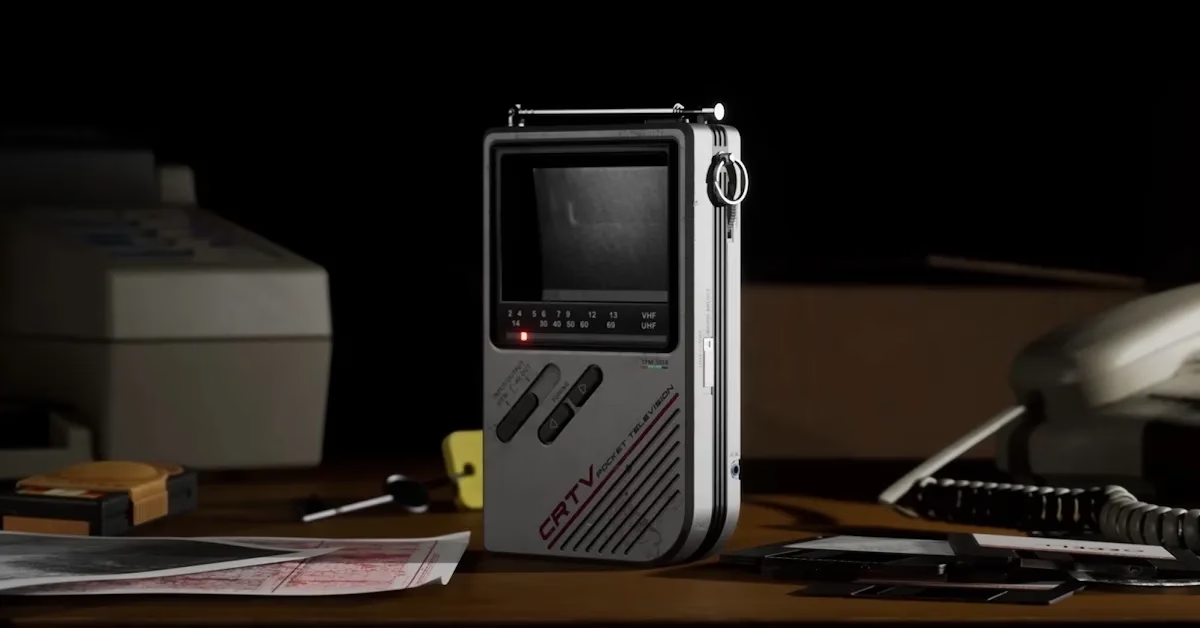
The teasers released thus far emphasize mood over mechanics, atmosphere over action. Shadowy corridors, cryptic symbolism, and ambiguous imagery dominate the promotional materials, suggesting Townfall prioritizes dread over shock. This philosophy aligns with the franchise's artistic heritage while potentially alienating players expecting conventional horror gameplay loops.
🌫️ Looking Beyond 2026
Konami's commitment to annual releases transforms Silent Hill from a dormant property into an active franchise comparable to other long-running series. This consistency provides numerous benefits: sustained fan engagement, continuous revenue streams, developer expertise accumulation, and cultural relevance maintenance. However, it also introduces quality concerns—can any creative team maintain excellence under annual deadline pressure?
The involvement of multiple studios mitigates this risk somewhat. By distributing development responsibilities across different teams with distinct specializations, Konami creates a production pipeline capable of supporting regular releases without burning out individual creators. Bloober Team focuses on high-fidelity remakes, Screen Burn explores experimental narratives, and other partners potentially handle additional formats.
This diversification strategy resembles a film studio maintaining multiple production units—some handling tentpole blockbusters, others cultivating prestige projects, and still others experimenting with innovative formats. Each serves distinct purposes while strengthening the overall brand ecosystem.
🔮 Community Anticipation and Expectations
The Silent Hill community finds itself divided between cautious optimism and enthusiastic anticipation. Veterans who experienced the original PS2-era titles approach new releases with protective skepticism, having witnessed multiple false starts and questionable decisions over two decades. Conversely, newcomers introduced through recent remakes display unbridled enthusiasm, eager to explore every corner of this fog-shrouded universe.
Townfall's indie credentials generate particular debate. Some fans celebrate the creative freedom this partnership enables, recognizing that experimental approaches often yield the most memorable horror experiences. Others prefer the technical polish and familiar gameplay structures of mainstream productions, viewing indie projects with suspicion regardless of pedigree.
This tension reflects broader industry conversations about game development philosophy. Should established franchises prioritize consistency and accessibility, or should they embrace risk-taking that might alienate portions of their audience while potentially attracting new demographics? Townfall serves as a test case for this question, its reception potentially influencing future franchise direction.
🎬 Final Considerations
As March 2026 approaches, anticipation builds for Silent Hill: Townfall despite—or perhaps because of—its unconventional development lineage. The collaboration between Annapurna Interactive and Screen Burn promises an experience distinct from both the original series and recent remakes, carving unique space within the franchise ecosystem.
Whether this experimental approach resonates with audiences remains uncertain until players experience the finished product. The indie development model offers creative flexibility impossible within traditional AAA constraints, potentially enabling innovations that redefine survival horror storytelling. Simultaneously, it carries risks associated with smaller budgets, less proven technology, and limited testing resources.
For those craving weird, unsettling experiences that prioritize psychological disturbance over mechanical refinement, Townfall presents an intriguing proposition. For players seeking familiar third-person horror with polished combat and exploration systems, the traditional remakes might better satisfy expectations. Both approaches possess validity—the franchise benefits from accommodating diverse preferences rather than forcing homogeneous design philosophy across all releases.
The fog continues rolling through Silent Hill's streets, obscuring what lies ahead while promising dark discoveries for those brave enough to explore. Whether Townfall becomes a celebrated experimental triumph or a noble but flawed attempt, its existence demonstrates Konami's commitment to keeping the franchise vital, relevant, and perpetually unsettling. 👻
