Stellar Blade Studio Goes Solo: A Gaming Empire Rising
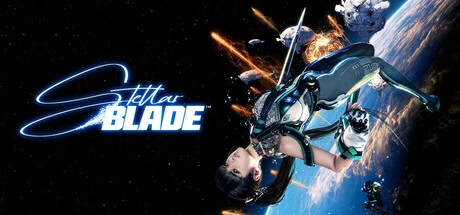
The gaming world is witnessing a major power shift that's got everyone talking. Shift Up, the South Korean studio that delivered one of 2024's most stunning action experiences, is stepping out from under the traditional publisher umbrella and charting its own course. This isn't just another corporate reshuffling—it's a bold statement about creative control and industry independence that could reshape how games reach players worldwide.
🎮 Breaking Free from the Publisher Model
Shift Up is officially building its own publishing infrastructure, and they're not playing around. Recent job postings paint a clear picture of their ambitions:
-
Marketing specialists to craft global campaigns
-
PR professionals to manage worldwide communications
-
Localization experts to ensure quality across multiple languages
-
Distribution coordinators to handle digital storefronts
This represents a fundamental transformation. The studio that once relied entirely on PlayStation to bring their vision to market is now saying "we've got this" and taking full ownership of their destiny. It's the kind of ballsy move that separates the players from the contenders in today's cutthroat gaming industry.
💰 The Numbers Behind the Confidence
You don't make this kind of pivot without serious proof of concept. By mid-2025, the studio's breakout title had moved over 3 million copies—a figure that speaks volumes about their ability to captivate audiences. That's not just good; that's "time to build an empire" good.
A studio representative confirmed to GameMeca that complete self-sufficiency is the endgame. They're done with compromises and split decisions. Every aspect of their future projects—from initial concept to final distribution—will flow through channels they control. It's about protecting their creative DNA while maximizing long-term sustainability.
🌍 Going Multiplatform: The Real Game-Changer
Here's where things get really spicy. With their own publishing arm, the studio's upcoming sequel isn't automatically tied to any single platform. While Sony helped launch the original as a PlayStation exclusive, the follow-up could drop simultaneously across:
| Platform | Strategic Value |
|---|---|
| PlayStation 5 | Established fanbase, proven success |
| Xbox Series X/S | Untapped market segment |
| PC | Growing action game audience |
| Nintendo Switch 2 | Portable accessibility, new demographics |
This multiplatform approach isn't just about selling more copies—it's about building a sustainable franchise that reaches every possible gamer. The studio views their IP as a "steady, long-tail property," which in industry speak means they're playing the long game. Smart money says bringing the original to new hardware first will generate organic hype that'll explode when the sequel finally drops.
🚀 The Strategic Rollout Plan
Financial reports reveal the studio is actively working on porting their hit title to additional platforms. The recent Q&A session specifically called out hardware beyond the current PS5 and PC versions. Translation? Current-gen Xbox consoles and Nintendo's next-generation handheld are absolutely on the roadmap.
This strategy is textbook brilliant for several reasons:
-
Market Testing: Gauge audience response across different ecosystems
-
Revenue Diversification: Multiple income streams reduce platform dependency
-
Community Building: Grow the fanbase before the sequel launches
-
Technical Experience: Learn platform-specific optimization for future releases
-
Negotiating Power: Prove multiplatform viability to potential partners
💪 From Developer to Industry Heavyweight
What we're witnessing isn't just a studio expanding its capabilities—it's the birth of a new gaming powerhouse that refuses to compromise its vision. By controlling the entire pipeline from development through publishing, they ensure their creative decisions aren't diluted by external stakeholders with different priorities.
The implications ripple far beyond this single studio. Other successful developers are watching closely. If Shift Up proves this model works at scale, expect more talented teams to question why they're splitting revenue and creative control with traditional publishers. The old gatekeepers might find themselves increasingly irrelevant in a world where quality studios can go direct-to-consumer.
🎯 What This Means for Gamers
For players, this shift brings nothing but good news:
-
Better Communication: Direct from creators to community without corporate filtering
-
Faster Updates: No approval chains slowing down patches and content
-
Player-Focused Decisions: Revenue goes back into games, not publisher shareholders
-
Cross-Platform Possibilities: More freedom to release everywhere simultaneously
-
Long-Term Support: Invested in franchise longevity, not quarterly reports
The studio's approach treats their IP as living, breathing worlds that need cultivation over years, not products to ship and forget. That philosophy aligns perfectly with modern gaming audiences who invest hundreds of hours into games they love. When developers and players share long-term thinking, everybody wins.
🔮 The Road Ahead
The gaming industry stands at a fascinating crossroads. Traditional publisher dominance is facing challenges from multiple directions—direct digital distribution, subscription services, and now, successful developers building their own infrastructure. Shift Up's move represents the next logical evolution in this ecosystem.
Their upcoming multiplatform expansion for the original game serves as the opening salvo in a much larger campaign. By establishing presence across all major platforms, they're laying groundwork for their sequel to launch with maximum impact. The studio that once needed a platform holder's support to reach audiences is now positioned to negotiate from strength—or bypass negotiations entirely.
🌟 The Bottom Line
Shift Up is writing a new playbook for ambitious developers who dream bigger than their current circumstances. They proved they could craft a hit game that resonated globally. Now they're proving they can handle the business side with equal finesse. By taking full ownership of publishing operations, they're protecting their creative vision while building sustainable infrastructure for decades of development.
The action genre has indeed gained a new powerhouse—one that refuses to play by outdated rules. Their success or failure will be watched closely by developers worldwide contemplating similar moves. But based on the strategic thinking demonstrated so far, smart money says this studio isn't just building games—they're building a legacy that'll influence the industry for years to come.
The message to both players and competitors is crystal clear: Shift Up isn't asking for a seat at the table. They're building their own table, and it's big enough to accommodate their entire vision without compromise. Game on. 🎮✨
