When Voices Became Data: My Fight Against AI in Apex Legends
The notification lit up my phone at 2 AM. Another contract amendment from the studio. I rubbed my eyes, thinking it was just routine paperwork—maybe updated payment schedules or recording session details. But as I scrolled through the legal jargon, my blood ran cold. They wanted us to train their artificial intelligence systems. They wanted us to teach machines how to replace us.
The Day Everything Changed
I've been voicing characters in video games for over a decade now. Every grunt, every battle cry, every emotional confession—I pour my soul into these performances. When I first landed the role in Apex Legends, I was ecstatic. The game had millions of players worldwide, and being part of such a massive franchise felt like validation of years of hard work and dedication.
But that contract addendum? That changed everything. 🎭
The terms were crystal clear, even through the corporate speak: by signing, we would be consenting to have our voice recordings used to develop and train generative AI models. In other words, we'd be creating our own replacements. The studio would own not just our performances, but the very essence of our vocal signatures—the unique qualities that make each of us irreplaceable.
Or so we thought.
The Collective Decision
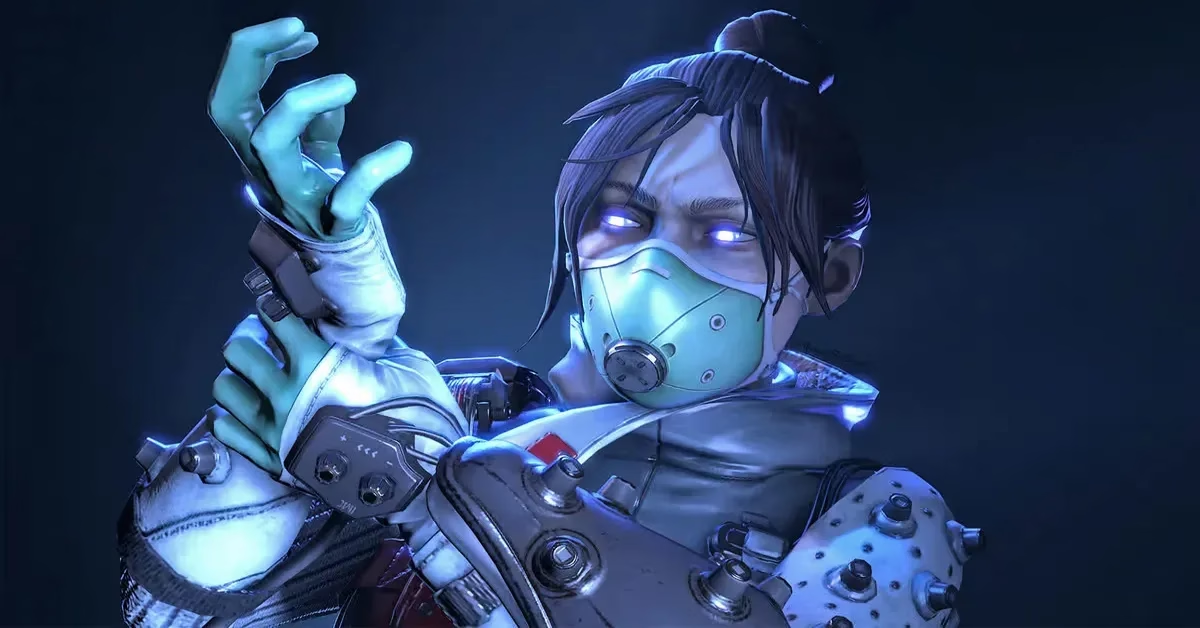
I wasn't alone in my shock and frustration. My colleague Pascale Chemin, who brings the iconic character Wraith to life in French, was among the first to speak out publicly. Through her Instagram platform, she courageously shared the dilemma we were all facing. Her post resonated deeply within our community—not just among voice actors, but with gamers and artists across multiple industries.
Within days, our small group of concerned performers grew into a movement. Over 30 of us—French voice talents who had dedicated countless hours to perfecting our craft for Apex Legends—made the same difficult choice: we refused to sign. We declined to become accomplices in our own obsolescence. 💪
The decision wasn't easy. This job pays my bills. It's how I support my family. Walking away from a major contract with Electronic Arts and Respawn Entertainment isn't something you do lightly in this industry. But some principles are worth more than paychecks.
Understanding What's Really at Stake
Let me explain what this AI training actually means for people like me. When we record voice lines for games, we're not just reading scripts. We're:
-
Interpreting character motivations and emotional states
-
Adding subtle vocal inflections that convey personality
-
Improvising reactions and ad-libs that bring authenticity
-
Collaborating with directors to refine performances
-
Building a relationship with the character over time
Artificial intelligence systems learn by analyzing massive amounts of data. In this case, they'd study every nuance of our performances—our timing, our breathing patterns, our emotional range, our unique vocal characteristics. The AI would essentially create a digital clone of each performer.
Today, that AI might just fill in minor background dialogue. But tomorrow? It could generate entire performances without ever calling us back to the studio. And the kicker? The studio would own these AI models indefinitely, free to use them however they wish, while we'd get nothing beyond our initial payment. 😤
The Bigger Picture Beyond Gaming
This controversy extends far beyond the world of video games and virtual battle royales. The entertainment industry is experiencing a seismic shift, and artificial intelligence sits at the epicenter of this transformation. Hollywood screenwriters struck in 2023 over AI concerns. Musicians are fighting unauthorized AI training on their compositions. Visual artists have filed lawsuits against companies using their work to train image generators.
We're all facing the same question: can technology and artistry coexist, or will one inevitably consume the other?
| Industry Sector | AI Impact | Artist Response |
|---|---|---|
| Voice Acting | Synthetic voice generation | Contract refusals, public protests |
| Visual Arts | AI image generation | Lawsuits, copyright challenges |
| Writing | AI content creation | Union negotiations, strikes |
| Music | AI composition tools | Rights management disputes |
The advancement of AI technology is undeniably impressive. These systems can now replicate human voices with startling accuracy. They can generate images, write stories, compose music—tasks we once thought required human creativity and intuition. But efficiency shouldn't come at the cost of human livelihoods and artistic integrity.
The Silence From the Top
What's perhaps most frustrating about this entire situation is the deafening silence from Respawn Entertainment and Electronic Arts. Since our collective refusal to sign the amended contracts, we've heard nothing official from the companies. No acknowledgment of our concerns. No willingness to negotiate or compromise. No statement addressing the ethical implications of their demands. 🤐
This silence speaks volumes. It suggests they either don't take our concerns seriously, or they're hoping the controversy will blow over quietly. Neither possibility is encouraging.
I've worked with many developers and studios throughout my career, and most have treated voice actors with respect and appreciation. But when corporations view performers as merely data sources to be harvested and replicated, something fundamental breaks down in that relationship.
What This Means for Gamers
You might be wondering: why should players care about voice actor contracts and AI training clauses? Here's why this matters to everyone who loves games:
Authenticity matters. The performances you hear in your favorite games come from real people who understand storytelling, character development, and emotional resonance. An AI might replicate the technical aspects of a voice, but can it truly capture the humanity that makes characters memorable? Can it improvise a perfect line that wasn't in the script? Can it collaborate creatively with developers to elevate a scene?
Quality concerns. If studios prioritize AI-generated content over human performances solely for cost savings, what happens to the overall quality of games? We've already seen games rushed to market with bugs and incomplete features. Adding AI-generated voice work into that mix could further degrade player experiences.
Setting precedents. How the gaming industry handles this controversy will influence how AI is implemented across entertainment. If companies can force performers to train their replacements without fair compensation or protections, what's to stop them from applying similar approaches to game designers, composers, writers, and other creative professionals? 🎮
The Path Forward
I don't oppose technology. I'm not a Luddite refusing to adapt to change. I've embraced new tools throughout my career—better recording equipment, advanced editing software, remote recording capabilities that emerged during the pandemic. Technology can be wonderful when it enhances rather than replaces human creativity.
What I'm fighting for is fairness and transparency. If studios want to use AI in voice acting, there needs to be:
-
Clear consent - Performers should have the right to opt-in or opt-out without losing their jobs
-
Fair compensation - If our voices train AI systems used indefinitely, we deserve ongoing royalties
-
Usage limitations - Contracts should specify exactly how AI-generated content can be used
-
Human oversight - AI should supplement human performances, not replace them entirely
-
Industry standards - Professional organizations need to establish ethical guidelines
These aren't radical demands. They're basic protections that recognize both the value of human artistry and the legitimate business interests of game developers.
Standing Together
The response to our protest has been overwhelming. Fellow voice actors from around the world have reached out with messages of support and solidarity. Gamers have shared our concerns on social media platforms, expressing their preference for authentic human performances. Even some developers have privately acknowledged that they share our worries about AI implementation.
This groundswell of support reminds me why I chose this profession in the first place. Voice acting isn't just a job—it's a calling. Every character I voice becomes a part of me, and I become a part of them. That symbiotic relationship between performer and character cannot be replicated by algorithms and neural networks. 🌟
Pascale's courage in speaking out publicly inspired many of us to join her. Sometimes it takes one person willing to risk everything to spark a movement. Her Instagram post became a rallying cry, and together we're showing that artists won't simply surrender their craft without a fight.
The Uncertain Future
As I write this, the situation remains unresolved. I don't know if Respawn Entertainment will reconsider their approach. I don't know if Electronic Arts will break their silence and address our concerns. I don't even know if I'll ever voice another line for Apex Legends.
What I do know is this: the fight for artistic integrity and fair treatment is worth having, regardless of the outcome. If we had quietly signed those contracts, we would have set a dangerous precedent for the entire industry. Future voice actors would face even worse terms, with even less leverage to negotiate.
The gaming industry stands at a crossroads. One path leads toward AI-driven efficiency that prioritizes cost savings over human creativity. The other path embraces technology while respecting the artists who make games memorable and meaningful. The choice of which path to take shouldn't be made unilaterally by corporate executives—it should involve everyone who contributes to this art form we all love.
A Message to the Industry
To developers and publishers: I understand the appeal of AI technology. It promises to streamline production, reduce costs, and meet demanding schedules. But please don't forget that games are art, not just products. The voices that bring your characters to life are created by real people with families, dreams, and bills to pay. We're not obstacles to progress—we're partners in creating experiences that players will remember for years to come.
To my fellow voice actors: Stay strong. This fight won't be easy, and we may face setbacks along the way. But our craft is worth protecting, and our livelihoods deserve respect. Together, we have power. Individually, we can be replaced; collectively, we cannot be ignored.
To gamers: Thank you for caring about who brings your favorite characters to life. Your support means everything. When you advocate for authentic performances and fair treatment of the artists behind the scenes, you're helping shape the future of gaming for the better.
Conclusion: Why I Won't Surrender
That contract amendment still sits in my email, unsigned and rejected. Some nights, I wonder if I made the right choice. The rational part of my brain whispers that fighting against technological progress is futile, that I should accept the inevitable and sign while I still have some negotiating power.
But then I think about the first time I heard my voice in a game, the way it felt to bring a character to life, the messages from players telling me how much a particular performance meant to them. I think about the younger generation of voice actors just starting their careers, and the industry I want to leave for them.
I refuse to be the person who made it easier for corporations to erase human artistry from entertainment. I refuse to train the machine that will replace me without fair compensation or protections. I refuse to go quietly into that algorithmic night. ✊
The story of the Apex Legends French voice actor protest is still being written. How it ends depends on choices being made right now by studio executives, industry leaders, and all of us who care about the future of voice acting. But whatever happens, I know I made the right choice by standing up and saying no.
Because some things—artistic integrity, fair treatment, human creativity—are worth fighting for, even when the odds seem impossible. Especially then.
And that's a performance no AI can replicate.
